
June 17, 2026
What is acupuncture?
What is acupuncture, how does it work and for which complaints is it used? A medically grounded overview from the private practice.
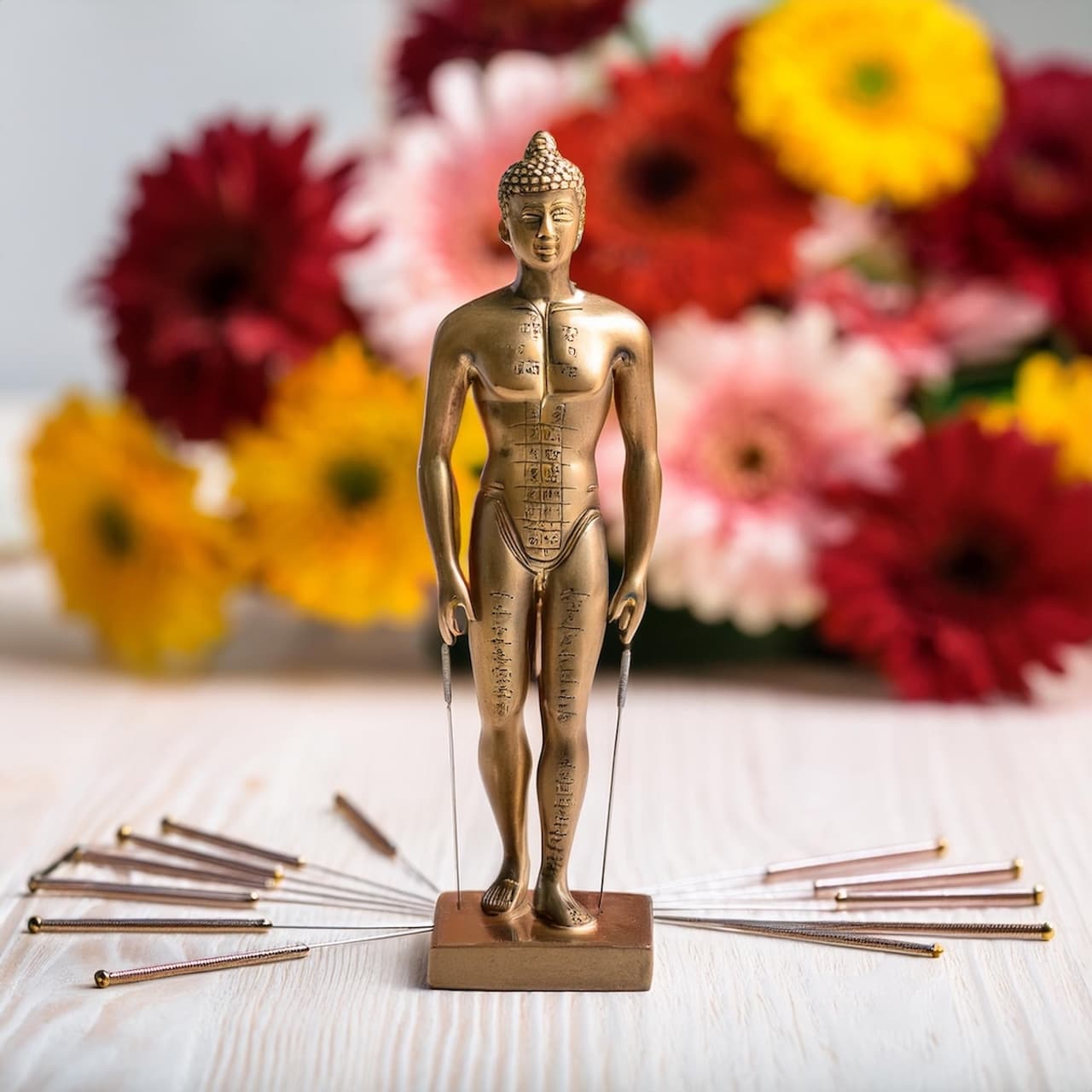
Acupuncture is a treatment method within Traditional Chinese Medicine (TCM) in which very fine, sterile needles are inserted at specific points on the body.
These points lie on the channels where, according to TCM theory, the life energy known as Qi flows. Needle stimulation activates and regulates the flow of Qi. Blockages and disturbances can be resolved.
The science behind acupuncture
Needle stimulation leads to different effects:
- Peripheral effects (in the tissue): Release of intracellular substances (H+, electrolytes, ATP/Adenosine, bradykinin, serotonin, prostaglandin, cytokines and others) with activation of nociceptors (pain receptors). This results in a local effect and pain inhibition.
- Spinal effects: Signals from the tissue are transmitted to the spinal cord via nerve fibers. This activates descending pain inhibition.
- Supraspinal/cerebral processes: Endorphins ("happiness hormones") and the body's own opioids are released centrally in the brain and lead, among other things, to pain inhibition.
- Other central effects: Stress-reducing effect with reduction of sympathetic activity (stress mode) and increase of parasympathetic activity (relaxation mode).
Common use cases of acupuncture
Acute and chronic conditions can be treated with acupuncture.
- Pain relief: back, neck, knee and joint pain, fibromyalgia
- Migraine and headaches
- Stress, inner restlessness and sleep disorders
- Digestive problems, for example irritable stomach or bowel
- Hormonal imbalances - PMS, cycle-related complaints, menopause
- Allergies - for example hay fever
- Support during smoking cessation and weight management
- Strengthening of the immune system
- Support in fertility treatment
and much more...
Limitations and short summary of the evidence
A confirmed positive effect of acupuncture was shown for ten indications, including chronic pain, low back pain, knee osteoarthritis, postoperative nausea and vomiting, migraine, tension-type headache, cancer-related fatigue, menopausal symptoms, female infertility (as an adjunct to reproductive medicine), and chronic prostatitis/chronic pelvic pain syndrome in men.
For 82 indications, a potentially positive effect was found, for 86 the evidence was unclear or insufficient, and for six indications no effect was found.
What treatment typically looks like
After a detailed consultation and examination, sterile and very fine needles are inserted at specific points on the body in medical acupuncture. The points are selected according to the complaints, and several acupuncture systems, for example ear and body acupuncture, can be combined.
The needles usually remain in place for 15 to 30 minutes while the patient rests in a relaxed state before they are removed. The treatment is low risk and largely painless.
You can discuss all further details in a personal consultation at my practice.
References
- Irnich, D., Wissenschaftliche Grundlagen der Akupunktur, Chin Med 2020;35:189-200
- Hempen, M. Bei welchen Indikationen ist die Akupunktur gesichert wirksam? - Zusammenfassung der Übersichtsarbeit. The State of Evidence in Acupuncture. Chin Med 40, 132-136 (2025)
- Brinkhaus, B., Ortiz, M., Dietzel, J. Willich,S.; Akupunktur bei Patienten mit chronischen Schmerzerkrankungen und Allergien - Übersicht zur aktuellen wissenschaftlichen Evidenz, Chin Med 2020;35:174-187